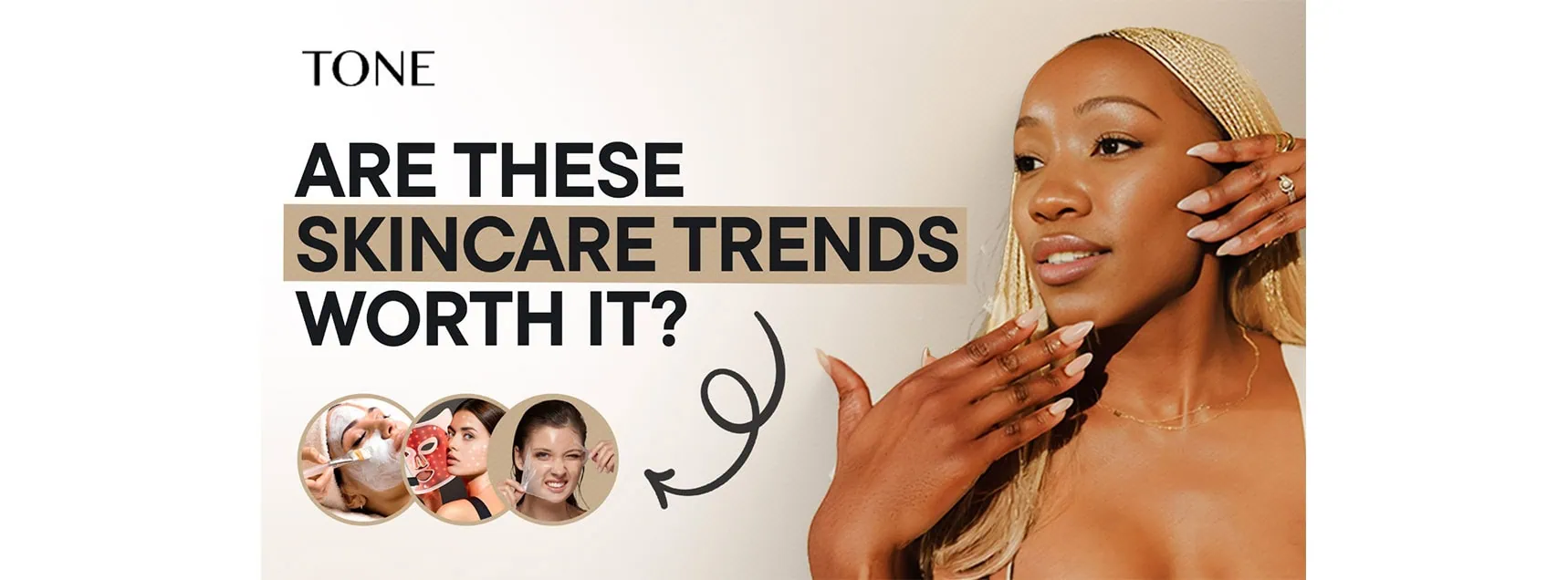
Skincare trends move fast. One week it’s a viral ingredient, the next it’s a new device or a 10-step routine everyone swears by. In this episode of Set the Tone, Dr. Caroline Robinson, board-certified cosmetic dermatologist in Chicago, breaks down what’s actually worth your time and what may be doing more harm than good.
From red light masks to azelaic acid, here’s a dermatologist’s take on today’s biggest skincare trends.
Red Light Masks: Helpful, With the Right Expectations
Red light therapy has earned its popularity for a reason. These devices use specific wavelengths of red and near-infrared light to stimulate skin healing and support collagen and elastin production.
However, not all red light masks are created equal. Factors like how well the device fits the skin, the number and strength of bulbs, and especially the wavelength being delivered all matter. While at-home red light devices are not as powerful as in-office treatments like lasers, they can still be beneficial when used consistently.
Red light therapy works best as a supportive treatment between in-office visits. Because it promotes healing rather than skin injury, it complements professional procedures nicely when expectations are realistic.
Verdict: Thumbs up when used correctly and consistently
Niacinamide: More Isn’t More
Niacinamide, a form of vitamin B3, is one of the most versatile and well-studied skincare ingredients in dermatology. It’s especially helpful for patients dealing with oiliness or uneven skin tone.
At lower concentrations, niacinamide can slow sebum production and help strengthen the skin barrier by stimulating the skin’s natural ceramide production. It can also improve hyperpigmentation without the irritation commonly seen with harsher actives.
Higher concentrations, such as 10%, are often unnecessary and may cause irritation, particularly for those with sensitive skin.
Dermatologist-approved sweet spots:
- 2% for oil control
- 4–5% for hyperpigmentation
Verdict: Thumbs up at the right percentage
Chemical Peels: In-Office Only
Chemical peels are one of the most effective tools in aesthetic dermatology for improving skin texture, tone, and overall radiance. They work by applying carefully formulated acids that exfoliate the skin at different depths.
This is also why chemical peels should never be performed at home. Small factors like dry skin, micro-cracks, or improper application can significantly alter how deeply a peel penetrates. When peels go too deep, they can cause chemical burns, scarring, and long-term pigment changes.
In-office chemical peels allow for precise control, safety, and customization based on skin type and concerns.
Verdict:
- In-office peels: Thumbs up
- At-home peels: Thumbs down
Peptides: A Supporting Player, Not the Star
Peptides are a helpful addition to skincare routines, but they are not the foundation. Core products like sunscreen, retinoids, and antioxidants do the heavy lifting.
Peptides can be useful for patients who cannot tolerate retinoids or who need a gentle boost in skin firmness, elasticity, or thickness. That said, claims suggesting peptides are “Botox in a bottle” should be taken with skepticism.
Botox is Botox. Peptides are supportive, not a substitute.
Verdict: Thumbs up when added thoughtfully
Azelaic Acid: The Rebrand That Deserves the Buzz
Azelaic acid has a unique history in dermatology. It was originally recognized for its role in a common condition called tinea versicolor, where it alters skin pigmentation. Today, it’s widely used to treat acne, rosacea, and post-inflammatory hyperpigmentation.
Azelaic acid offers anti-inflammatory and antimicrobial benefits while improving both red and brown discoloration. This makes it especially effective for patients experiencing acne-rosacea overlap or pigment changes related to inflammation.
It’s available in both prescription and over-the-counter strengths, allowing flexibility based on skin type and concern.
Verdict: Thumbs up
Multi-Step Skincare Routines: Less Really Is More
Social media skincare routines often feature six or more products, but more steps don’t necessarily lead to healthier skin. In fact, they can increase the risk of irritation and clogged pores.
Skin has just a few core needs: cleansing, exfoliation, and moisturization. These can often be met in three to four steps. Each product should serve a clear purpose.
The more products you layer, the more likely you are to overwhelm the skin barrier.
Verdict: Thumbs down for overly complicated routines
The Bottom Line
Trendy doesn’t always mean effective, and more isn’t always better. The best skincare routines are simple, intentional, and grounded in science.
If you’re unsure which ingredients or treatments are right for your skin, a personalized consultation with a board-certified dermatologist can help you cut through the noise and build a routine that truly works for you.
Ready to simplify your skincare with expert guidance? Book a visit with our team and let’s set the tone for healthier skin.


